

Empowering Women Entrepreneurs Through Scale-Up Vision: Munir Hasan’s Session at BRAC Bank Tara Uddokta 101 Scale-Up Summit 2026
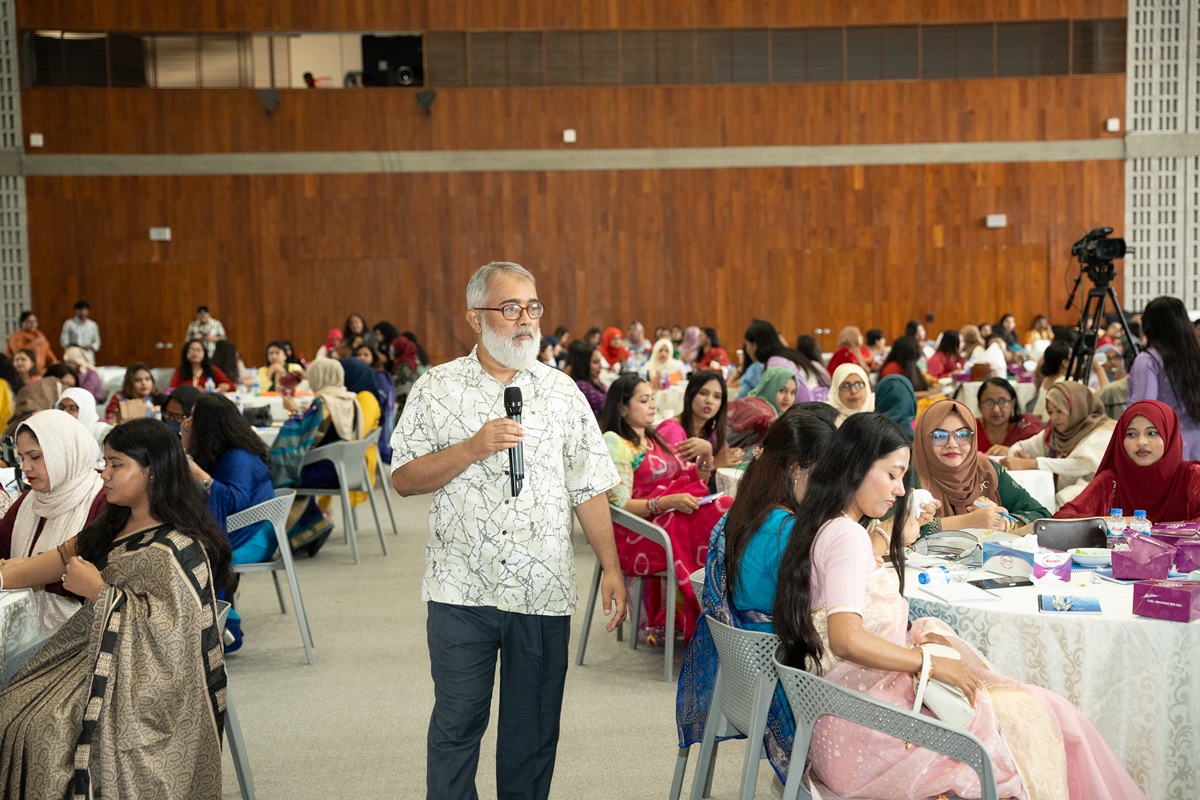
More than 220 women entrepreneurs from different sectors came together for an intensive day-long Scale-Up Summit on on May 13, 2026, at BRAC University, under the BRAC Bank Tara Uddokta 101 initiative, where renowned educator, entrepreneur mentor, and General Secretary of Bangladesh Open Source Network (BdOSN), Munir Hasan, conducted an engaging five-hour workshop focused on entrepreneurship growth, leadership, financial literacy, and business sustainability. During the workshop, women entrepreneurs reflected on their entrepreneurial journeys with uddokta 101 initiative, identified ongoing business challenges, and envisioned the future of advanced entrepreneurial support.
Implemented in partnership with Bangladesh Open Source Network (BdOSN), the “Uddokta 101” initiative has supported more than 500 women entrepreneurs across universities and emerging business communities in Bangladesh since 2021. Through structured training on business management, financial literacy, leadership, branding, digital marketing, customer engagement, and growth planning, the programme has helped many participants strengthen their business operations and confidence.
The workshop was designed as an interactive impact review session, allowing entrepreneurs to openly evaluate the effectiveness of the Uddokta 101 journey. Through facilitated discussions, live feedback mapping, and participatory reflection exercises, the session generated practical insights into what women entrepreneurs found most valuable, what barriers they still face, and what they expect from the next phase of entrepreneurial acceleration.
Participants highlighted several modules of Uddokta 101 initiative as particularly useful and relevant to their business growth. The most appreciated sessions included Mental Wellbeing, Digital Marketing and Branding and Business Analysis and Identifying Opportunities to Grow. Conversely, heavy technical subjects indicated a need for more granular, hands-on support. Record Keeping and Accounting alongside Digital Marketing and Branding, while Financial Literacy indicating a significant need for deeper instructional focus.
The workshop also exposed critical daily operational blind spots that continue to stall small business growth. When surveyed about essential business practices that they still fail to execute regularly even after Uddokta 101 initiative, around 85% entrepreneurs admitted they do not separate their salary funds from their business funds. Additionally, 9 participants confessed to neglecting regular financial record-keeping, while 7 noted they failed to set a proper effective plan for their marketing posts on social media. Smaller percentages acknowledged gaps in making personal time, maintaining regular customer communication, or formalizing their entities through trade licensing and TIN registration.
Despite these persistent structural hurdles, the majority of entrepreneurs reported measurable positive changes after joining the initiative. The participating entrepreneurs reported substantial personal development, with time management and financial management tying at the top of the personal growth chart. The training successfully equipped them with the practical skills needed to balance intensive familial responsibilities with business operations, alongside giving them the confidence to manage employee dynamics and product pricing models.
Many entrepreneurs reported that their sales increased by approximately 7–10% after joining the initiative, while several introduced new products and services to their businesses. Some participants shared that they had opened new shops, while a few had already started their export journey. Repeat customer rates also increased by around 5–7% for many entrepreneurs, reflecting improved customer trust and satisfaction. Participants noted that training on professional communication, customer handling, financial management, and digital marketing significantly increased customer confidence in their products and services. Beyond financial growth, entrepreneurs said the programme strengthened their professional identity, improved public familiarity with their businesses, and boosted their confidence as business leaders, ultimately contributing to higher sales and stronger customer loyalty.
The second half of the workshop focused on designing the future advanced chapter of the initiative — “Uddokta 102.” Participants collectively outlined what they believe the next phase should prioritize in order to support actual business scale-up.
Among the participants, 78 entrepreneurs emphasised the need for business expansion and growth-focused courses, while 49 participants highlighted the importance of loan readiness and financial preparation training. Around 26 entrepreneurs stressed the necessity of learning business registration and formalisation processes. Notably, almost all participants expressed interest in advanced digital marketing training, while nearly 90% showed strong enthusiasm for export-orientated learning and international market access. Another 40 participants prioritised product and service development support to improve competitiveness and quality.
When asked what outcomes would make them truly satisfied after completing Uddokta 102, 46 participants said they wanted comprehensive knowledge on operating live online stores, while 49 participants emphasised the importance of preparing bank-ready documentation and gaining opportunities to pitch directly before bankers. Nearly all participants also expressed interest in export opportunities, while many wanted a structured business expansion plan at the end of the programme. The discussions clearly reflected that women entrepreneurs are now looking beyond startup-level learning and seeking advanced mentorship, financial inclusion, market expansion, and investment readiness support.
The workshop emphasised that women's entrepreneurship development in Bangladesh must move beyond short-term training interventions and focus on long-term ecosystem building. The session encouraged entrepreneurs to critically analyse their operational gaps while also recognizing the progress they have already achieved.
The workshop at the TARA Uddokta 101 Scale-Up Summit 2026 demonstrated that women entrepreneurs across Bangladesh are increasingly prepared to formalise, digitise, and scale their businesses. However, the discussions also highlighted the need for continuous mentorship, structured advanced learning, financial inclusion, and stronger market linkage opportunities.
The event concluded with a collective reflection on the programme's future scale-up roadmap, emphasising deeper collaboration among financial institutions, academia, entrepreneurs and ecosystem partners to advance women-led enterprise development across Bangladesh.